- CERVICAL CANCER
Cervical cancer is cancer that starts in the cervix. The cervix is the lower part of the uterus (womb) that opens at the top of the vagina. Cervical cancer starts in the cells on the surface of the cervix. There are two types of cells on the surface of the cervix, squamous and columnar. Most cervical cancers are from squamous cells.
Cervical cancer usually develops slowly. It starts as a precancerous condition called dysplasia. This condition can be detected by a Pap smear and is 100% treatable. It can take years for dysplasia to develop into cervical cancer. Most women who are diagnosed with cervical cancer today have not had regular Pap smears, or they have not followed up on abnormal Pap smear results.
Almost all cervical cancers are caused by HPV (human papillomavirus). HPV is a common virus that is spread through sexual intercourse. There are many different types (strains) of HPV. Some strains lead to cervical cancer. Other strains can cause genital warts. Others do not cause any problems at all.
If cervical cancer is diagnosed, the health care provider will order more tests.
|
























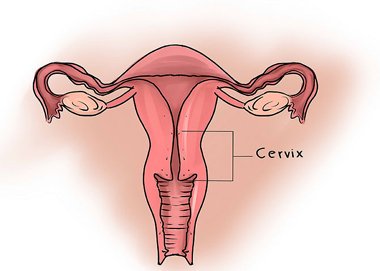
 The endocervical canal is lined with a single layer of column-shaped cells, while the ectocervix is covered with multiple layers of cells topped with flat cells.